

Can My Vehicle Handle a Rooftop Tent? Roof Load Ratings Explained
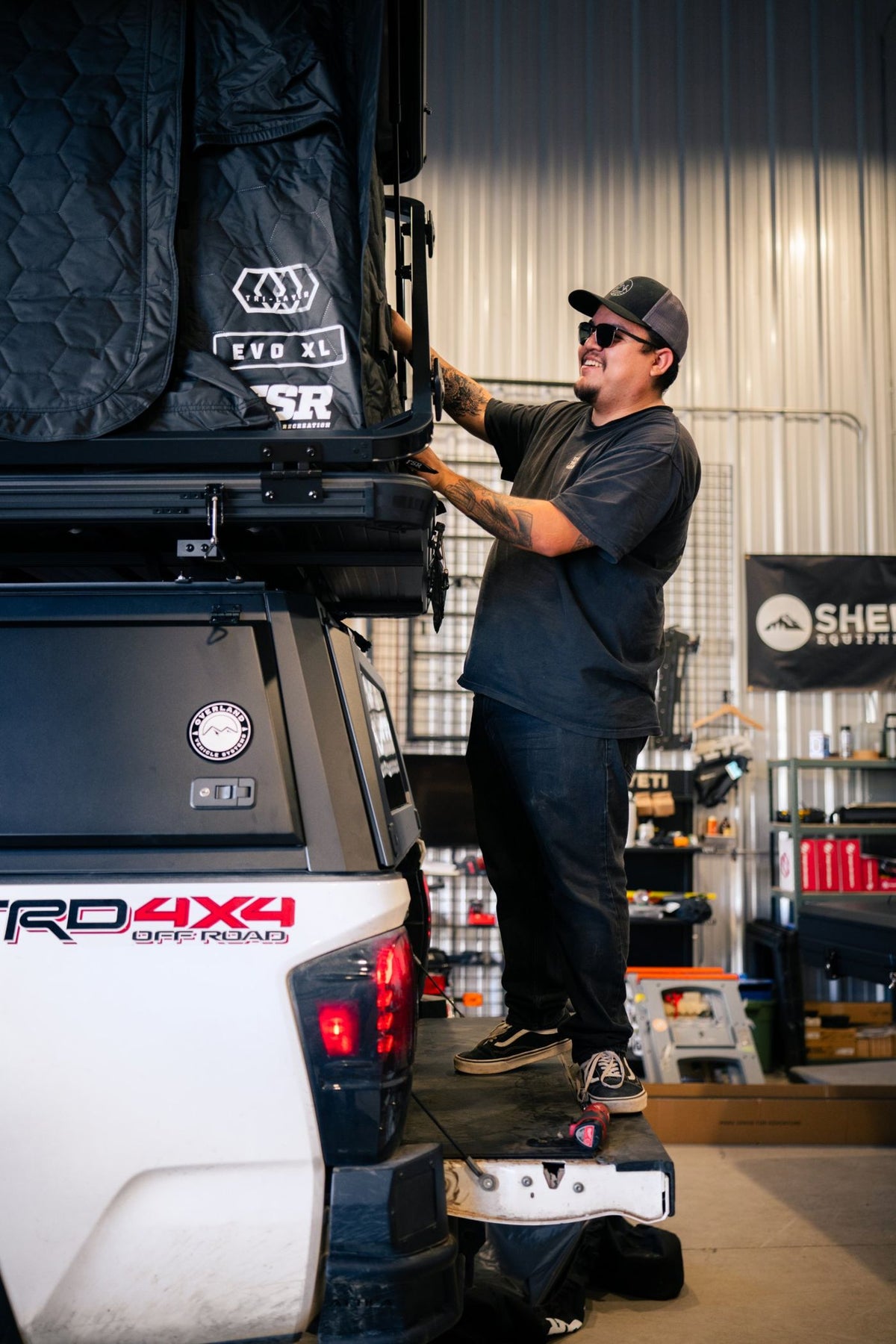
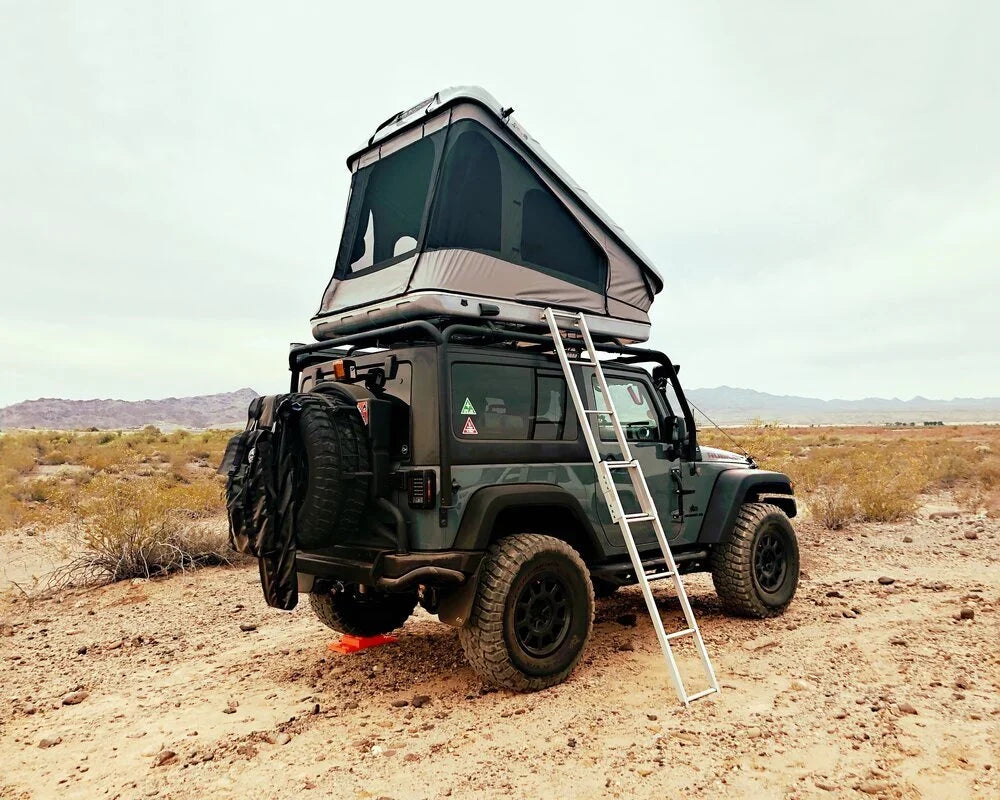
"Will this tent work on my vehicle?" is the question we hear most on the phone. In one recent week we talked it through with owners of a Scion xB, a Jeep Grand Cherokee L, a Wrangler JL and a Subaru Crosstrek.
The short answer: most vehicles can carry a rooftop tent. The real answer depends on three numbers: your roof's dynamic load rating, the weight of your tent, and the weight of your rack. Here's how we work through it with customers, the same way we would if you called the shop.
Dynamic vs. static: the two numbers that matter
Your roof has two weight limits, and they measure very different things.
- Dynamic load rating is what your roof can safely carry while the vehicle is moving. Braking, cornering, washboard roads and off-camber trails all multiply the forces on your roof, so this number is low. On many vehicles it's somewhere between 100 and 200 lbs.
- Static load rating is what your roof can hold while the vehicle is parked. It's much higher, often several times the dynamic number, because the weight is just sitting there.
That difference is why a roof that's "only" rated for 150 lbs can still hold two adults sleeping in a tent. When you're camping, you're parked, so the static rating applies. The number that limits which tent you can run is the dynamic one.

How to do the math
Add up everything that rides on the roof while you drive, then compare it to the dynamic rating:
Tent weight + rack or crossbar weight + anything else up there (awning, Rotopax, recovery boards) = your roof load
People forget the rack. A simple crossbar set adds about 10 lbs, and a full platform rack can add 40 lbs or more. Here are two real setups from recent calls:
| Vehicle | Dynamic rating | Tent | Rack | Total | Our take |
|---|---|---|---|---|---|
| Jeep Grand Cherokee L (2023) | 150 lbs | 135 lbs | ~10 lbs (crossbars) | ~145 lbs | Works, with very little margin left |
| Scion xB (2012) | ~150–165 lbs (unofficial) | 162 lbs (FSR Nova King) | ~10 lbs (crossbars) | ~172 lbs | Over the likely limit, so we flagged it and showed a lighter option |
If the total is comfortably under your dynamic rating, you're in good shape. If it's close or over, keep reading.
What if your manufacturer doesn't publish a rating?
This happens more than you'd think. One customer with a Scion xB had gone through three owner's manuals and called a Toyota dealer, and he still couldn't find a roof rating anywhere.
In our experience, a missing rating usually means the manufacturer didn't design the roof to carry much. They're not saying you can't put anything up there. They're just not encouraging it. When we can't find an official number, here's what we do:
- Look for the rating in the owner's manual, the factory roof rail or crossbar documentation, and the rack maker's fit guide.
- Treat forum and owner-reported numbers as estimates, not specs.
- Assume the lower end of what similar vehicles are rated for. Many compact SUVs, like the standard Subaru Crosstrek and some Kia Sorentos, sit around 150–165 lbs dynamic.
Our rule of thumb: keep the tent under 250 lbs
Even when a vehicle can technically carry more, we steer most people toward tents under 250 lbs, as long as your roof and rack ratings allow it. It's not just about the roof. Weight up high raises your center of gravity, and you'll feel it in crosswinds, on tight corners and anywhere the trail tilts sideways.
If you're shopping and the tent you like is 280 lbs and 12 inches tall, that's usually a sign to look at a lighter, lower model. Plenty of hard-shell tents with room for two (or two people and two dogs) come in well under 250 lbs.
When the rack matters as much as the roof
Your rack has its own weight rating, and the lower of the two numbers (roof or rack) is your real limit. A few things we explain on almost every rack call:
- Match the rack to your roof. Raised rails, flush rails and bare roofs each need different mounting feet. On a bare roof, we take extra time making sure the rack is solid.
- Some setups need drilling. On a Jeep Wrangler, the stoutest option we carry, the Rhino-Rack Backbone system, uses an internal brace that requires drilling through the hardtop. We tell customers that up front.
- Read rack ratings with a skeptical eye. Some brands publish very high dynamic numbers. Others, like Sherpa and Backwoods, publish more conservative ones. In our experience, a lower published number doesn't mean a weaker rack. Racks that bolt to the same mounting points with the same hardware fail at the same place in a hard hit: the bolts. We'd rather you plan around the cautious number.
What we do when you're right at the limit
We don't make any of this gear, so our value is our experience with it. If your setup is close to the limit, we'll tell you, even if it costs us the sale. As Corey puts it: "I'd rather you not buy anything from us than buy the wrong thing."
When a setup is borderline, we'll usually:
- Show you the math so you can see exactly how close you are.
- Suggest a tent with the same sleeping space that weighs 20–30 lbs less.
- Recommend the strongest rack option for your roof, including a drilled mount through one of our partner shops if needed.
- Leave the final call to you, with everything laid out honestly.
Not sure about your vehicle? Ask us.
Text or call us at (720) 339-0142 with your year, make and model, plus a photo of your roof. We'll look up your rating, check rack fitment and recommend a tent that fits, whether you're installing it yourself or booking an install in our shop in Castle Rock.
Shop rooftop tents → or use the shop-by-vehicle finder on our homepage to see racks and gear that fit your rig.
Still deciding between hardshell and softshell? Read How to Choose a Rooftop Tent: Advice From Our Install Shop.
Comments